
One model, every sales asset
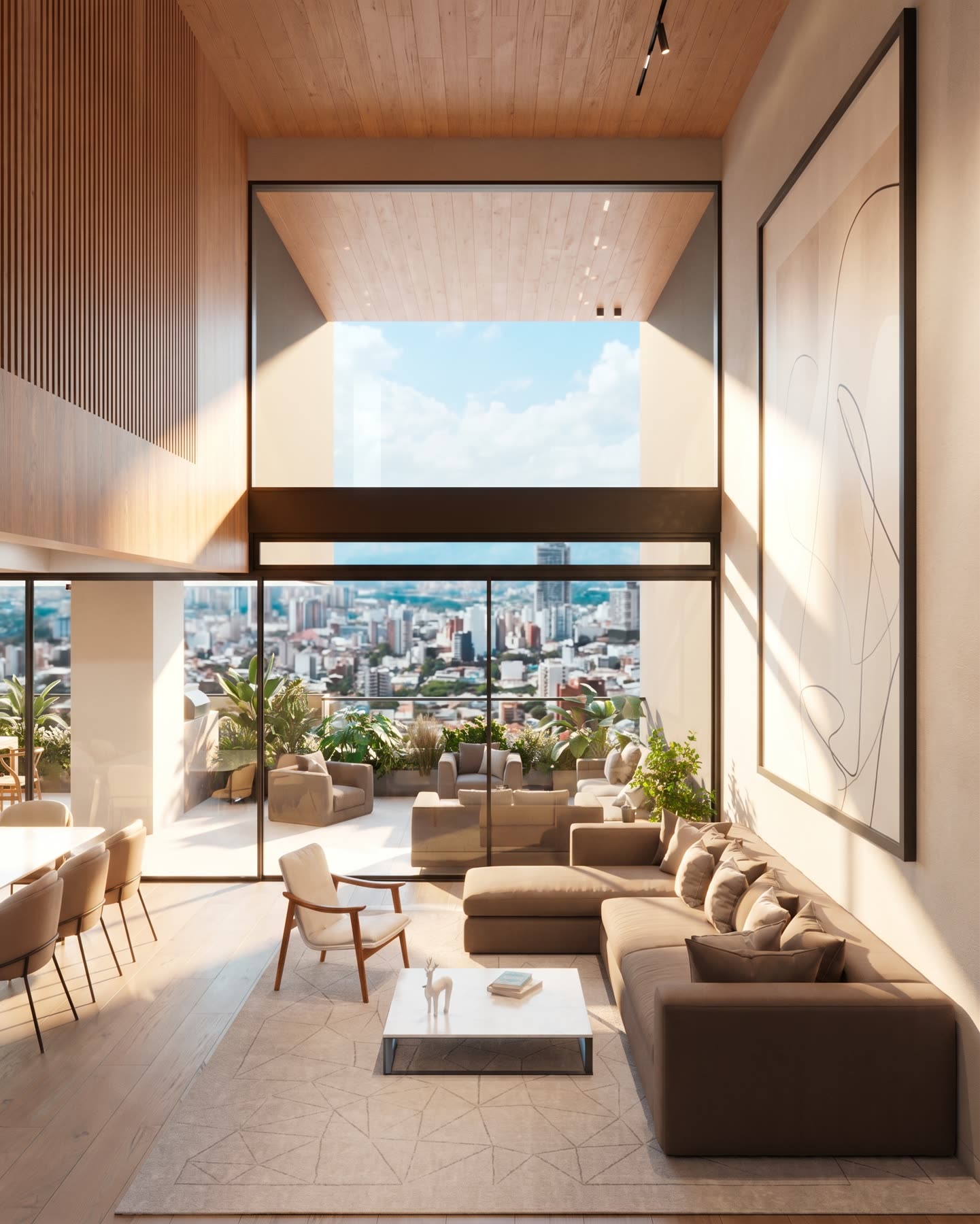
The traditional way to produce sales material for a real estate project is one commission at a time. You hire whoever does the renders. Then a production company for the video. Later, someone for the 360° tour. Each starts from the drawings, each interprets them their own way, and each charges in full.
Want to see this on your project? Book a free demo
The expensive part is the model, not the asset
In a 3D production, the heavy work sits in one place: building the project in three dimensions. Modelling every space at its real dimensions, applying the materials that will actually be installed, resolving the lighting, setting up the surroundings. That is what takes time and what costs money.
Once that model exists, producing an image is placing a camera. Producing a video is moving that camera. Producing a 360° tour is spinning it on one spot. And an interactive model is letting the user move the camera themselves.
Four outputs of the same work, not four jobs. Commissioning them separately from different suppliers means paying four times to build the same thing four times.
An example of how far this goes
PropVR, the Dubai firm that built DAMAC Properties’ digital twin, describes how it delivers that same model depending on the audience: touch screen applications for the sales gallery, a pixel-streaming and video-call tool for the web, browser-based platforms for remote reach, virtual reality experiences for investors, LED walls for experience centres and holographic displays for events.
Six very different formats. One model behind all of them.
On customising the content, they mention something any sales director will recognise: sales teams can create their own animations and walkthroughs for presentations and social media, and reuse the material for exhibitions and physical galleries, without producing anything again.
The benefit nobody puts in the quote
The saving is obvious, but it is not the most valuable part. The most valuable part is consistency.
When each asset is produced separately, the brochure render has one countertop and the video has another. The 360° tour was made before the last facade change. The model on the portal shows amenities that have since been redesigned. Nobody did anything wrong: each asset simply froze at a different moment in the project.
That mess reaches the buyer, and it reaches them at the worst moment: when they compare. A buyer looking at two different versions of the same apartment does not think “how disorganised”. They think “which one am I actually getting?”. And that doubt costs sales.
With a single model that cannot happen. Change the bathroom tile and it changes in the model, and every asset regenerates saying the same thing. The material stops ageing in pieces.
What it means in practice
It means you can start wherever it is most urgent — usually renders for the launch — and add the rest when the project and the budget call for it, without starting over. The video for ads, the tour for the portal, the interactive model for the sales room: all of it is one step away, because the heavy work is already done.
That single model is what we call the project’s digital twin. Out of it come the architectural renders, the 3D video, the 360° tours and the virtual sales room. One model, and everything else on top.
Sources
Unreal Engine — PropVR’s digital twins and DAMAC Properties · Unreal Engine — Long live the decision engine: how UE is powering the future of home building
Want to see this on your project?
Book a free demo and we'll show you a real virtual sales room, working.
Request a demo