
Why your off-plan apartments sell slowly (and it is rarely the price)
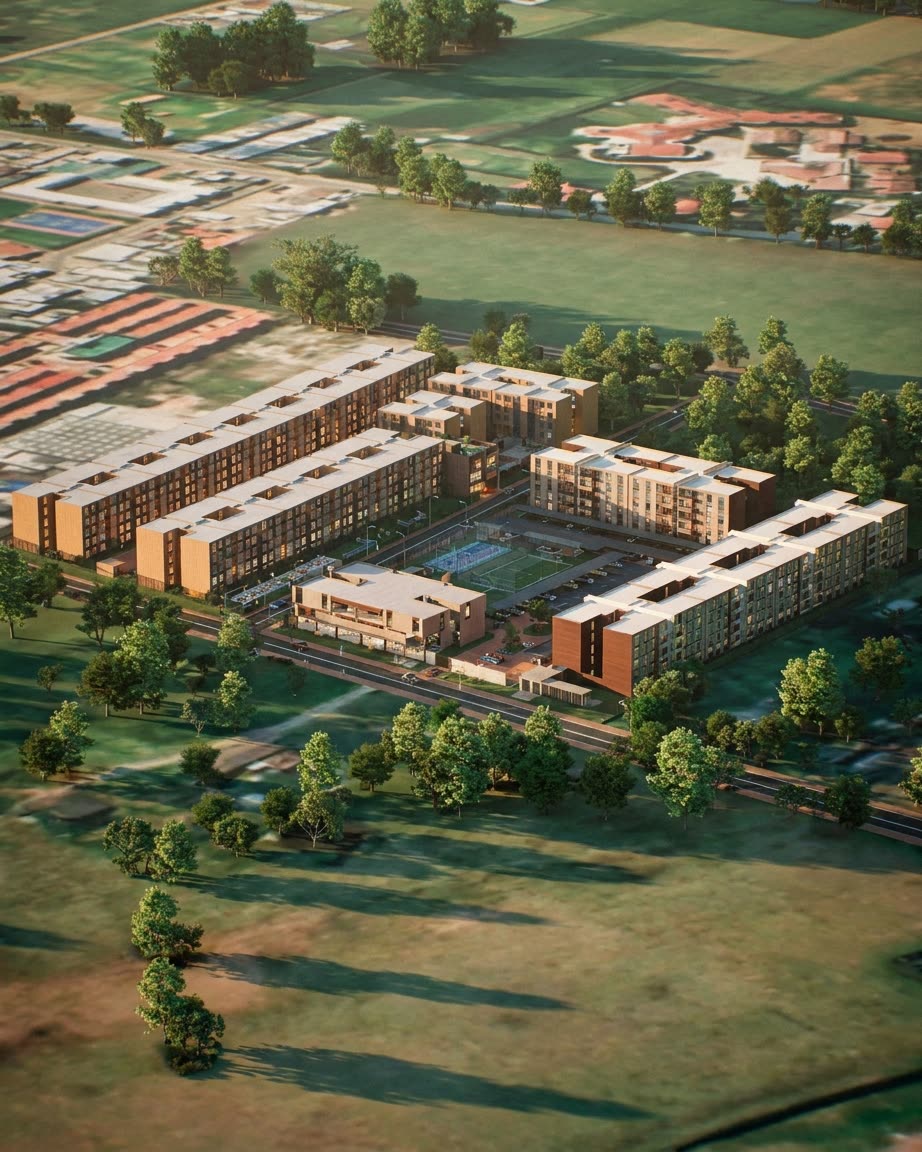
It happens in almost every project that stalls. Visits come in, the sales rep explains, the buyer says they like it… and the reservation never arrives. The usual reaction is to touch the price: a launch discount, a finishes bonus, easier installments. Often that does not work either.
The reason is that price is rarely the underlying doubt. You are asking someone to make the biggest purchase of their life about something they cannot see. A discount makes that doubt cheaper, but not smaller.
Want to see this on your project? Book a free demo
Price is the wrong lever
Lowering the price makes sense when the buyer already understands the product and is comparing it with another one. But in off-plan housing that comparison is rarely between two projects: it is between your project and the option of not deciding yet. Price does not compete against that option. Certainty does.
And certainty, in a project that does not exist yet, is built by showing. That is why two projects with the same price per square meter can sell at very different speeds: the one that is easier to understand sells first.
Three symptoms that the problem is visualization
- Many visits, few reservations. The interest is there and the ads work. What fails is what happens when the buyer tries to imagine living there.
- The questions are about how it looks. "How big is the living room really?", "what can I see from the fourth floor?", "does a table for six fit?". A floor plan answers them in theory, and a buyer cannot translate it.
- "I'll think about it" and "I'll come back with my partner". Whoever decides is often not at the visit. If all they take home is a brochure, the second person decides on a PDF.
What the buyer needs to see and a floor plan does not show
A floor plan is made for building, not for buying. It shows walls and measurements, but leaves out the five things that weigh on the decision: the real scale of the spaces, how the light comes in, what view each floor has, how the finishes look and how the spaces connect. The buyer has to imagine all of it, and everything they imagine is one more doubt.
A graphics engine closes that gap
This is where the equation changes. With a high-performance graphics engine like Unreal Engine, the same kind of software used to make the most realistic video games, the project is built completely in 3D and the buyer walks through it in real time: into the living room, out onto the balcony, changing the flooring and tiles, and looking at the view from the floor and orientation that interest them.
There is another big advantage for sales. Every sales asset comes out of that same model: renders for the property portal, video for social media, the 360° tour the sales rep sends over WhatsApp and the interactive application for the sales room. It all tells the same story because it all comes from the same file. We explain it in detail in what a real-time graphics engine is.
And the buyer who will never come
For part of the market this problem is even more serious. According to Camacol, as of November 2025, 12.1% of new housing in Colombia was sold to non-residents, and another 12.5% to Colombians living in a different department from the project. One in four buyers will never set foot in your sales room.
For them, whatever you send is the whole project. If it is a PDF, they buy on a PDF. If it is a tour that opens on their phone and can be walked through on a video call with the sales rep, they buy on something much closer to reality. Zillow found that 60% of buyers would buy without visiting if a virtual tour is available.
How to know if the change worked
There is no need to wait until the project closes. Three indicators move quickly: the share of visits that end in a reservation, the time between the first visit and the reservation, and the number of "how does it look" questions the sales rep has to answer. If the problem was visualization, all three improve within the first few weeks.
To complement this with concrete tactics, see the 5 keys to selling off-plan projects faster and the data on how much faster a 3D tour sells.
Sources
Portafolio — Camacol / Coordenada Urbana: sales to non-residents · Zillow Research — 3D tours and virtual tools · Unreal Engine — How UE is transforming home building
Ready to accelerate the sale of your project?
We build your project once in Unreal Engine, and the renders, video, 360° tours and interactive sales room all come from it, ready for any phone.
Request a demo