
Real-estate sales board: what it is, which columns it needs and how to use it
The sales board, known in Colombia as the “cuadro de ventas”, is the table where a real-estate project tracks, unit by unit, what is available, what is reserved and what is sold, along with each unit's area, price and status. It is the source advisors check before offering an apartment and the one management reviews to see how sales are going. In other countries the same sheet is usually called the inventory or the availability list.
Two numbers management often asks for come from that board. Sales per square metre is the value sold divided by the area sold. The sales closing rate compares reservations with the visits or appointments attended in the same period. Below you will find which columns the board needs, how to keep it current and how to connect it with what the buyer sees.
Want to see this on your project? Book a free demo
Which columns a sales board needs
The board has one row per unit. These are the columns almost every project needs.
| Column | What it records | What it is for |
|---|---|---|
| Unit | Tower, floor and number | Identifying each apartment without ambiguity |
| Unit type | Floor plan type, bedrooms and bathrooms | Filtering what each family is looking for |
| Area | Built and private | Calculating the value per square metre |
| Orientation and view | Which way the unit faces | Explaining price differences between identical units |
| List price | Current value and date of the list | Avoiding quotes with old prices |
| Status | Available, on hold, reserved, sold | Knowing what can be offered today |
| Date of last change | When the status changed | Measuring sales velocity |
| Advisor and channel | Who sold it and how the buyer arrived | Assessing the team and the advertising |
Buyer details and payment terms go in columns only the internal team sees. The version shown in the sales room carries the unit, the area, the price and the status.
Unit statuses and who changes them
- Available. It can be offered.
- On hold or under negotiation. An advisor has held it for a client for a short time. Every hold needs an expiry date.
- Reserved. The buyer signed and paid the reservation.
- Sold. There is a purchase agreement or the equivalent document in your country.
- Cancelled. The buyer withdrew and the unit is available again. It is worth noting the reason, as explained in cancellations in off-plan housing.
Put in writing who can change each status. The usual arrangement is that the advisor requests the hold and one person, the sales director or the sales room coordinator, confirms the reservation once the payment comes in.
How to keep it current
- One version. A shared file or a system, never copies sent by chat.
- One owner. A named person who answers for the board being correct.
- Changes on the spot. The status is updated when the reservation happens, before attending the next family.
- Regular reconciliation. Compare the board with payments received and with the records of the trust company or the finance team.
- A dated price list. When prices change, the whole board changes the same day.
The costliest mistake is offering a unit that has already been reserved. A buyer who goes through that stops trusting the rest of the information you gave them.
Which numbers come out of the board
Sales per square metre
Add up the value of the units sold and divide it by the sum of their areas. The result is the average value per square metre sold. Compare it with the value per square metre of the units still available: if what remains is more expensive per metre than what has already sold, you know the remaining inventory needs stronger arguments or better material.
Sales closing rate
Divide the reservations in a period by the visits or appointments attended in that period. The board provides the reservations with their dates, and the sales room log provides the visits. How to improve that number is covered in how to raise the closing rate.
Sales velocity
Count the units that move to reserved each month and compare them with the target required by the presale break-even point. The rest of the dashboard is in sales room indicators.
How it connects with what the buyer sees
A table is of little use to a buyer. They want to see the building and know which apartments they can choose. That is why the sales board has a public face: the status of each unit shown on the facade or on the floor plate, on the sales room screen and on the project page.
- The public face shows the unit, the area, the status and, if the developer decides so, the price. It never shows other buyers' details.
- The public information is fed from the same board, with a visible update time.
The options for publishing that inventory are in apartment availability online, and choosing a unit on the building itself in the 3D building viewer.
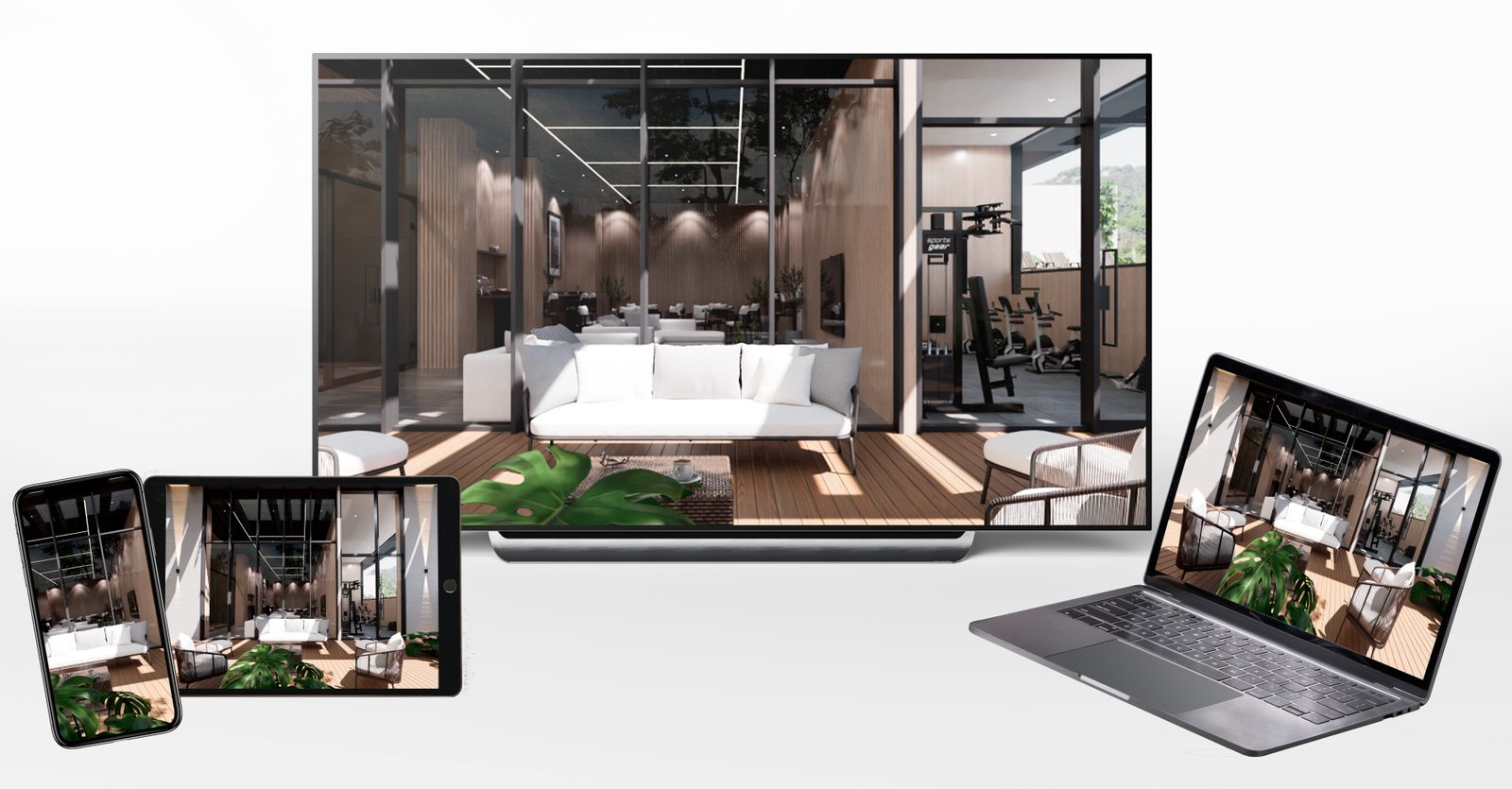
At Inviewd we build the project once in Unreal Engine, and from that virtual model (also called a digital twin) come the renders, the 3D video, the 360° tours and an interactive sales room that runs on a screen and on a phone. Showing the status of each unit on that model, fed from your sales board, is something that can be built for an off-plan project. Take a look at the virtual sales room.
Frequently asked questions
What is a cuadro de ventas (sales board) in a real-estate project?
It is the table that tracks, unit by unit, the area, price and status of every apartment: available, on hold, reserved or sold. Advisors rely on it to offer units and management relies on it to measure.
How do you calculate sales per square metre?
Add up the value of the units sold and divide it by the sum of their areas. The result is the average value per square metre sold, which you compare with that of the available units.
How do you calculate the sales closing rate?
Divide the reservations in a period by the visits or appointments attended in that same period. The sales board provides the reservations and the sales room log provides the visits.
How often should the sales board be updated?
The moment a unit's status changes, before attending the next buyer. It is also worth reconciling it regularly against the payments received.
Ready to accelerate the sale of your project?
We build your project once in Unreal Engine, and the renders, video, 360° tours and interactive sales room all come from it, ready for any phone.
Request a demo