
Physical model or virtual model: what works best in the sales room (and when to have both)
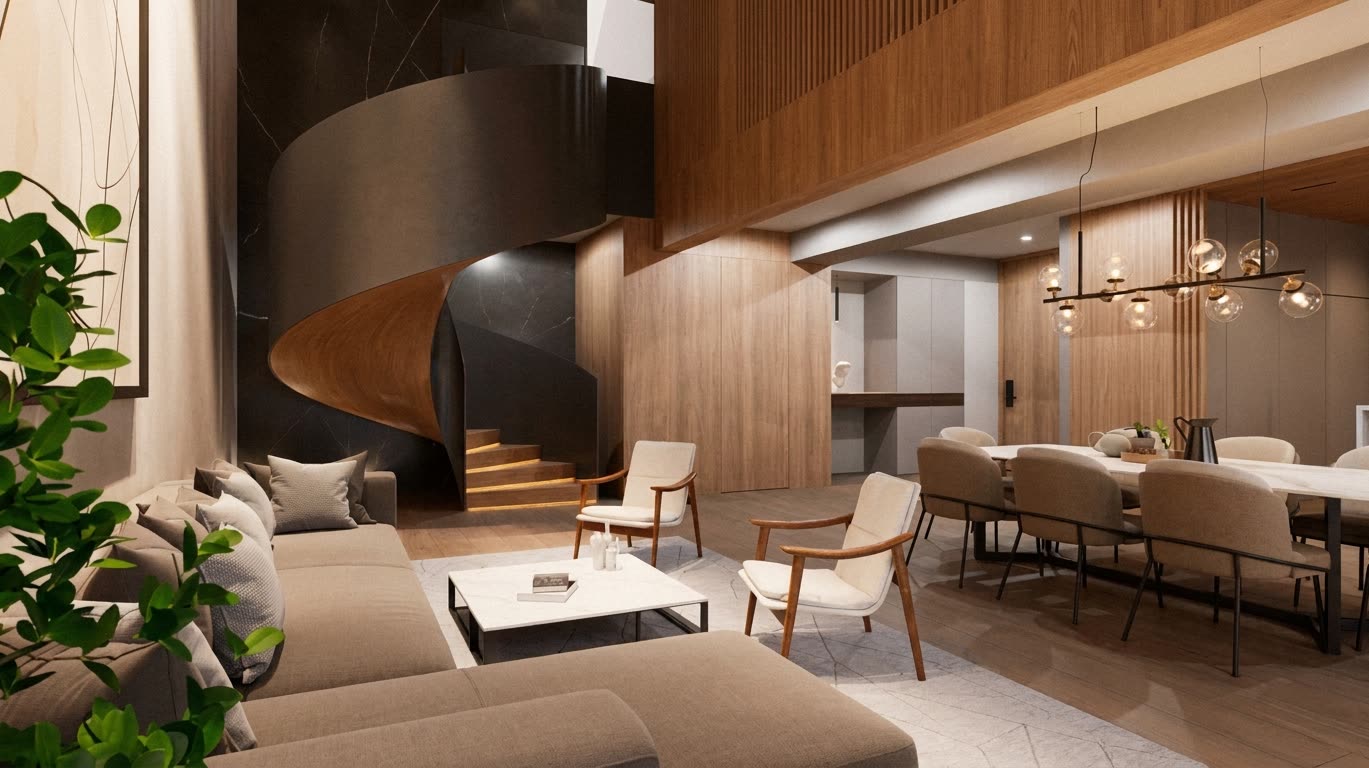
In many sales rooms in Colombia there is a scale model at the center: the building in miniature, with foam trees, an acrylic pool and lights that switch on floor by floor. People walk up, crouch down and look for their window. It works, which is why it is still there.
The question many developers ask is whether it is still worth it now that the whole project can be toured in 3D. The short answer is that they do different jobs. The long answer is in this article.
Want to see this on your project? Book a free demo
What the physical model does well
A scale model has something no screen can match: it is there in the room. Several people can stand around it at once, each looking from their own angle, and the rep can point with a hand. For understanding the project as a whole, it is very effective:
- Volume and site layout. How many towers, how tall they are and how they sit on the lot.
- The immediate surroundings. The roads, the park next door, where the entrance is.
- Where each unit is. "Your apartment is this one, on the corner of the ninth floor."
- Presence in the room. It is an object that draws people in from the door.
What the physical model cannot show
The problem is that the questions that decide a purchase are not answered from above. Buyers want to know whether their dining table will fit, how the kitchen looks with the floor they chose, what they will see from the window on the seventh floor and how much light comes in during the afternoon. A scale model does not go inside the apartment, does not change finishes and shows a bird's-eye view, not the view of someone standing on the balcony.
That is why so many sales rooms pair the scale model with a model apartment, which does show the interior, but of only one unit type, with one finish package and at a high cost. We compare them in model apartment vs. virtual sales room.
When the project changes
Projects change during pre-sales: a unit type is adjusted, the entrance moves, the facade color changes. With a physical model, every change means rebuilding parts, repainting or, at worst, leaving in the sales room a model that no longer matches what will be delivered. That is a commercial risk, because buyers believe what they see.
In a virtual model the change is made once and appears everywhere at the same time: on the sales room screen, in the phone tour and in the renders. The Water Street Tampa sales center in the United States shows one way to have both: a 3D-printed model of the city, nearly five meters across with more than 450 buildings, onto which twelve laser projectors cast the digital content. When something changes, the projection changes, not the model.
Quick comparison
| Physical model | Virtual model | |
|---|---|---|
| Understanding the whole | Very good | Good, from the aerial view |
| Interior of each unit type | No | Yes, all of them |
| Real view from each floor | No | Yes |
| Changing finishes | No | Yes, on the spot |
| Design changes | Parts have to be rebuilt | The model is updated |
| Leaving the sales room | No | Yes: phone, video call, fairs |
| Drawing people in from the door | Very good | Depends on the screen and where it is |
How to combine them
When there is budget for both, what works best is giving each one its job:
- The physical model welcomes and orients. The rep starts there: the whole project, the surroundings, the tower and the floor.
- The screen takes you inside. From the floor pointed out on the model, you move to the same apartment in the virtual model: the entrance, the living room, the view from the balcony.
- The buyer personalizes. They change the flooring and the countertop, compare two unit types, look at the light at different times of day.
- They take the link home. That night they tour the same thing on their phone with their family.
The order matters. If the screen is in a corner and the model is in the middle, the rep ends up explaining everything from above and the buyer never goes inside the apartment. Put the screen a few steps from the model, visible from the same spot. In designing a sales room we explain how to place each zone.
When the virtual model is enough
In some cases the physical model is unnecessary: small or traveling sales rooms, fair booths, pre-sales that start before there is a sales room and projects sold mostly to buyers from elsewhere. There, the aerial view of the 3D model plays the role of the scale model and also reaches the buyer's phone. Grupo Koi, for example, sold its Kronus project in Bucaramanga without a model apartment and with buyers from Medellín to Israel, as its manager explains in the Koi case.
And in some cases it is worth keeping: large projects with several towers and phases, master-planned developments where the surroundings are part of what is being sold, or sales rooms where the model already exists and works as a magnet.
Before you order a scale model
- Which buyer question does it answer that the aerial view of the 3D model does not?
- What happens to it if the project changes in the next six months?
- Where will it go when you close the sales room?
- How much of your selling happens outside the sales room, where the model cannot go?
If the model still makes sense after those questions, order it. If not, put that money into the complete 3D model of the project. At Inviewd we build it in Unreal Engine and leave it ready for the sales room screen, the phone and the video call.
Frequently asked questions
Is a physical scale model still useful in the sales room?
Yes, for understanding the whole: the volume, the site layout and the surroundings of the project. What it cannot show is the interior, the real view from each floor or the finishes, which are the questions that weigh most in the decision.
What is a virtual model?
It is the project built in 3D in a graphics engine and toured in real time. It lets you see the whole project from above, go inside each unit type, change finishes and look at the view from any floor, on the sales room screen or on a phone.
Can the physical and virtual models be combined?
Yes, and it usually works better than either one alone. The physical model places the buyer in the whole project and the virtual one takes them inside the apartment they pointed to. Some sales rooms even project digital content onto the physical model.
What happens to the model if the project changes?
With a physical model, the affected parts have to be rebuilt or repainted. With a virtual model, the model is updated and the change appears in every channel at once.
Sources
Sixteen:Nine — Water Street Tampa: 3D-printed model with projection mapping in its sales center
Ready to accelerate the sale of your project?
We build your project once in Unreal Engine, and the renders, video, 360° tours and interactive sales room all come from it, ready for any phone.
Request a demo