
One sales room for several projects: selling your whole portfolio from one place
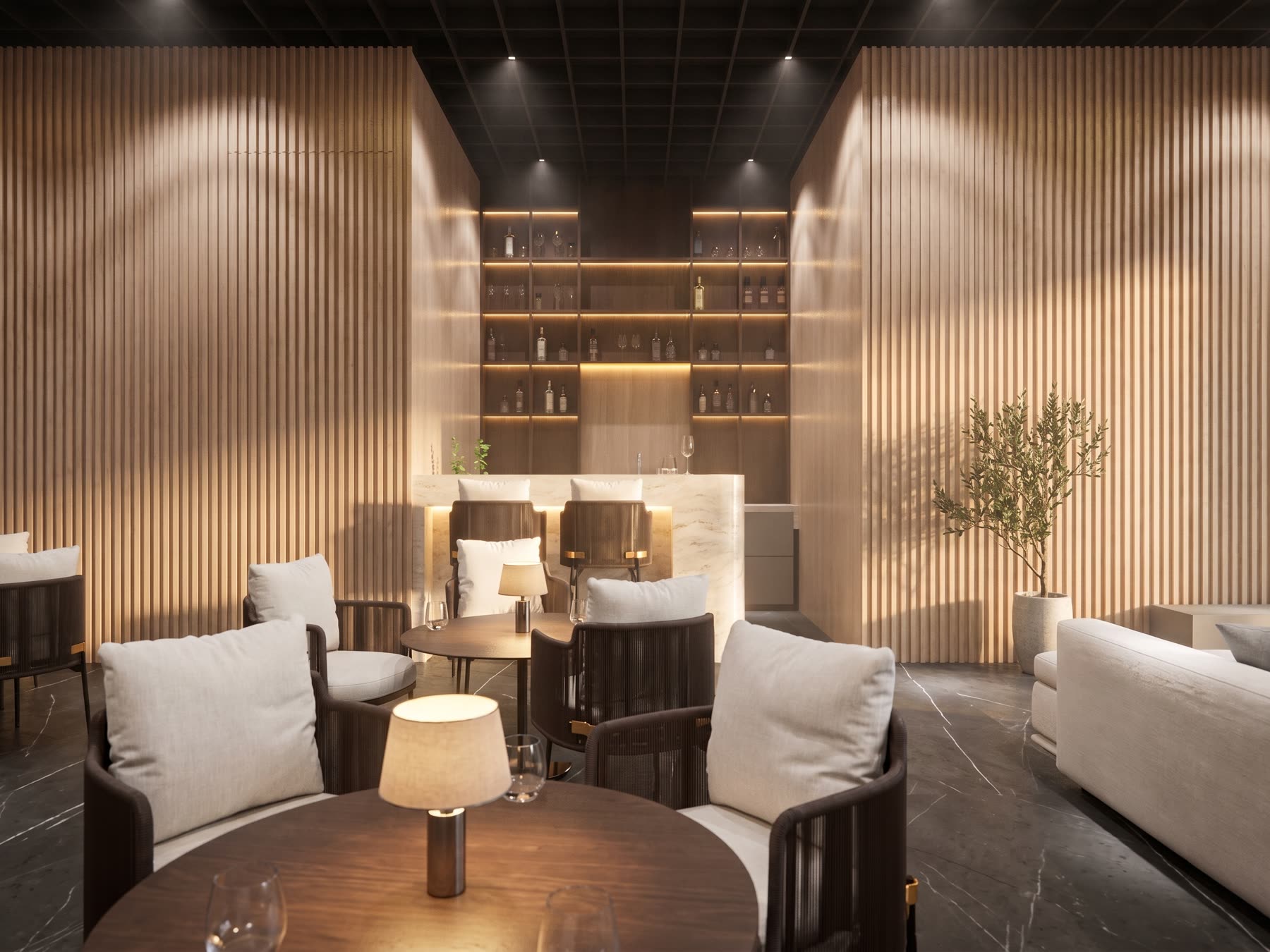
A developer with three active projects usually has three sales rooms: three rents or build-outs, three setups, three furnishings, three teams and three dismantlings. Every time a project sells out, that investment gets torn down and the next one starts from zero.
The alternative is a multi-project room: one well-located space where the buyer walks in without knowing which of your projects suits them and walks out with a unit reserved in the right one. It works because the project no longer takes up square meters: it takes up a screen.
Want to see this on your project? Book a free demo
How it works
The space gets organized once: reception, a project zone with the screen, material samples and closing tables. What changes between clients is the model the agent opens. Each project has its own, with its surroundings, unit types, finishes and availability.
For the buyer it feels like an agency: they arrive with a need (budget, area, number of bedrooms) and the agent shows the two options in your portfolio that fit, side by side, on the same screen. Three separate rooms cannot do that.
What it saves
- One space. One rent or build-out, not three.
- One setup and one dismantling. The most underestimated line item in the budget of a physical sales room.
- A team that is never idle or stretched. When one project cools down, the agents work the others instead of waiting.
- Shared furnishing. Screen, material samples and furniture serve every project, including the ones that do not exist yet.
There is also a less obvious saving. A new project has a sales room on day one, with no waiting three months of construction to start selling.
How the team is organized
There are two models, and both work:
- Agent per portfolio. Everyone knows every project. It converts better, because anyone can serve anyone, but it demands training and well-organized materials.
- Agent per project, same room. Each keeps their specialty and reception routes people. Easier to implement, and it preserves accountability for each project's targets.
In both cases the CRM has to record the project of interest from the first contact. Without that, per-project targets become impossible to track.
Availability is the other thing that has to be shared. If each project keeps its own list in a separate file, the agent ends up promising a unit that was reserved an hour earlier in another conversation. One board, visible from the closing table and updated in real time, prevents the most embarrassing call in the business.
Reception matters more here than in a single-project room. The person who greets visitors is the one who decides which agent and which project the conversation starts with, so they need the qualifying questions written down: budget, area, number of bedrooms and timeline. A good routing at the door saves the agent fifteen minutes and the buyer a wasted visit.
The real risk: confusing the buyer
Showing three projects to someone who does not know what they want lengthens the decision instead of shortening it. The practical rule is qualify before showing: budget, area and timeline in the first few minutes, and from there a maximum of two options. A third project on the table almost always subtracts.
The second risk is internal. Projects can end up competing for the same buyer, with the team pushing whichever pays the better commission. Per-project targets and a clear recommendation criterion prevent it.
When it does not fit
- Projects in different cities. A room in Bucaramanga is useless to a buyer who wants the Bogotá project: although the virtual tour is not.
- Incompatible audiences. Social-interest housing and high-end in the same room make both uncomfortable. We cover it in sales rooms for social-interest housing and high-end projects.
- A project that sells on its surroundings. If the view or the neighborhood is the argument, a room on the lot still wins. There the mix works: a multi-project room plus a small booth on site.
The digital version of the same idea
The multi-project room also exists without a physical space: one page per project with its tour, one team working over video calls and WhatsApp, and a shared calendar. Abroad there are already platforms where several developers coexist under one digital roof; we cover it in selling without a physical sales room.
To choose the overall format, go back to the real estate sales room guide; for location, where to locate the sales room.
Frequently asked questions
Can several projects be sold from a single sales room?
Yes, when each project has its own 3D model and all of them are shown on the same screen. Space, furnishing and team are shared, and the buyer can compare two portfolio options in the same visit.
How do you avoid confusing the buyer?
By qualifying before showing: budget, area and timeline in the first few minutes, and a maximum of two projects on the table. Showing the whole portfolio to everyone lengthens the decision.
When does a multi-project room not fit?
When the projects are in different cities, when they target very different audiences, or when the selling argument is the lot's surroundings. In that last case, combine a central room with a booth on site.
How is availability handled across projects?
On a single shared board, updated in real time and visible from the closing table. With separate lists per project, agents end up offering units that were already reserved in another conversation.
What happens when a project sells out?
The room stays open with the others and the new project enters on day one, with no construction and no setup. That is the main saving compared with building and dismantling one room per project.
Ready to accelerate the sale of your project?
We build your project once in Unreal Engine, and the renders, video, 360° tours and interactive sales room all come from it, ready for any phone.
Request a demo