
Sales rooms for social-interest and high-end housing: what changes in each
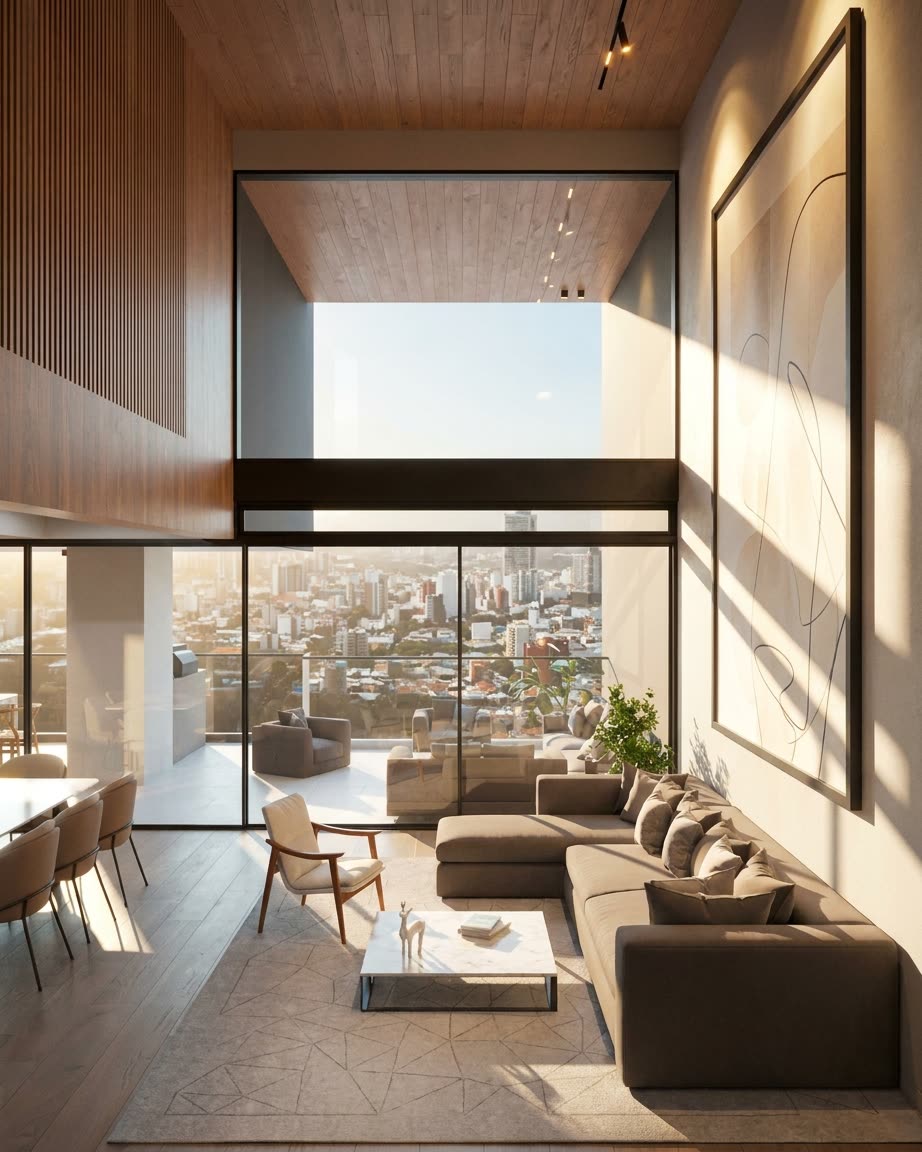
The same sales room does not serve a social-interest housing project and a high-end one equally. Not because of the budget, although that too, but because the two buyers arrive with different questions and decide on different criteria.
Copying one format into the other is expensive in both directions: a luxurious room for affordable housing burns budget that ends up in the price, and a generic room for a high-end project makes buyers doubt the quality before the agent says a word.
Want to see this on your project? Book a free demo
Two different buyers
The social-interest housing buyer is usually buying their first home. Their underlying question is whether they can afford it: how much is the down payment, which subsidy they qualify for, whether financing will be approved and what the monthly payment would be. They often come with family on a Saturday, after seeing two other projects, and decide by comparing payment against payment.
The high-end buyer does not have that doubt. Theirs is whether the project is worth what it costs: which finishes they get, what view they have from their floor, what the amenities are like and who they will be living among. They decide slowly, book a meeting, come back a second time and compare details, not prices.
What changes in the room
| Social-interest housing | High-end | |
|---|---|---|
| Location | High traffic: shopping mall or main road | On the lot or at the office, by appointment |
| Service model | Volume: several agents and weekend shifts | Booked meetings, one agent per client |
| Space priority | Financing and subsidy advice area | Privacy, materials and closing area |
| What weighs most | Monthly payment, location and delivery dates | View, finishes, amenities and detail |
| Show apartment | Rarely justified | A single one can be justified |
| Visit length | Short: there is a queue | Long: time has to be given |
Sales materials, by segment
In affordable housing the materials have to answer the monthly payment: a financing simulator, a subsidy table, a clear payment plan and a sheet per unit type with area and price. And they have to be easy to take away: the buyer will compare them at home against the two other projects they saw.
In high-end the materials have to survive scrutiny: the view from their floor, the light at different hours, the detail of the finishes and the amenities at their real level. A generic render or a catalog image does more damage than no material at all.
How the 3D model is used in each case
It sells in both, in different ways.
In affordable housing the model accelerates: the buyer sees the real scale of their apartment in two minutes, understands the dimensions work for them and stops having to imagine. With no show apartment, first-person tours cover every unit type at once, and the agent serves more people in the same time. The cost of the model spreads across many units, so per unit it is low.
In high-end the model convinces: the view from the fourteenth floor at sunset, the real tile in the bathroom, finishes changed live during the conversation, a walk through the rooftop lounge. It is where a touchscreen pays off most and where production quality shows.
The agent's script
In affordable housing: qualify first (income, subsidy, savings) and only then show. Showing an apartment to someone who cannot buy it wastes both people's time.
In high-end: the other way around. First the experience (the surroundings, the view, the apartment) and price once there is desire. Asking about budget in the first minute breaks the conversation.
The most expensive mistakes
- In affordable housing: building an expensive room with a show apartment. That cost ends up in the sale price, in exactly the segment where every peso of the monthly payment decides the purchase.
- In high-end: saving on visual material. A buyer paying for finishes and views will not accept generic images.
- In both: the same brochure for the whole portfolio. Each segment needs its own argument.
For the full set of formats, go back to the real estate sales room guide. And if you run both segments at once, see the multi-project sales room, because mixing them in one space has conditions.
Frequently asked questions
What changes between an affordable-housing sales room and a high-end one?
Affordable housing runs on volume and financing advice: high-traffic location, several agents, and fast answers on monthly payment and subsidies. High-end runs on privacy and detail: booked meetings, real materials, the view from each floor and time to decide.
Is a show apartment worth it in a social-interest housing project?
Almost never. Its cost lands in the price in the segment where the monthly payment decides the purchase. 3D tours of every unit type plus a panel of real materials cover the same job for far less.
Do the same materials work for both segments?
No. In affordable housing the materials revolve around the payment, the subsidy and the location; in high-end, around the view, the finishes and the amenities. The 3D model is the same kind of tool, but what is shown and in what order changes.
Can both segments be served in the same room?
It can be done, but it makes both audiences uncomfortable if they share the same space at the same time. If it is unavoidable, separate the hours or the zones, and use different agents for each segment.
Ready to accelerate the sale of your project?
We build your project once in Unreal Engine, and the renders, video, 360° tours and interactive sales room all come from it, ready for any phone.
Request a demo