
The budget of a physical sales room: where the money goes (and how much of it comes back)
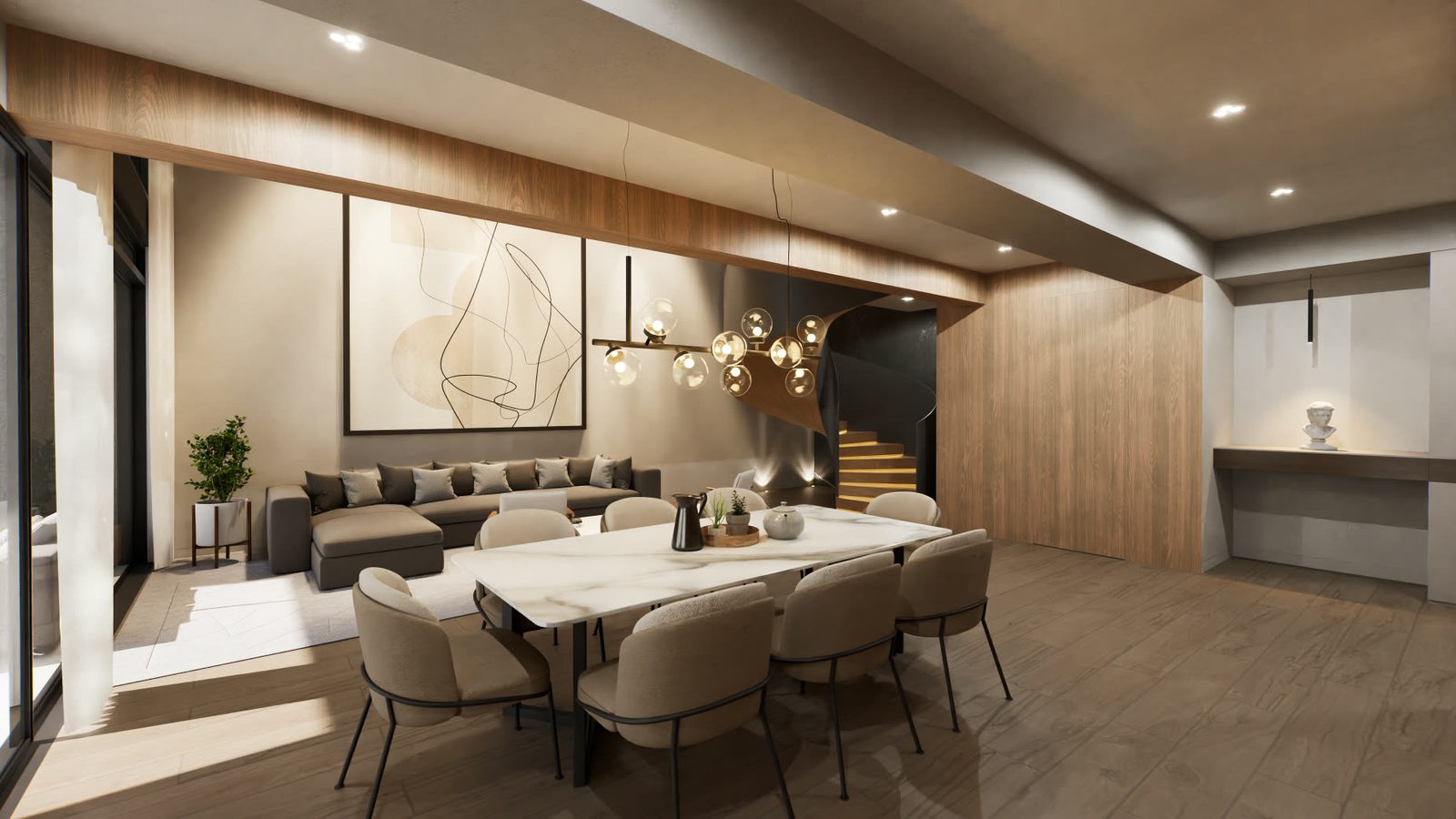
When a developer budgets its sales room, it almost always looks at construction: how much it costs to build and furnish the space. It is the most visible figure and often not the largest. The room has a monthly cost that runs for the entire sales period, a show apartment that is paid for early and recovered late, and a dismantling cost at the end that nobody included in the first spreadsheet.
We are not going to give you a figure: it depends too much on the city, the size, the space and how many months sales last, and a generic number would lead you to a bad decision. What we will give you is the complete list of line items and the formula to get the math right.
Want to see this on your project? Book a free demo
The nine line items of a physical sales room
| Line item | What it includes | What it depends on | Does any of it come back? |
|---|---|---|---|
| 1. Space | Preparing the lot or renting a unit | City, location and months of use | No |
| 2. Room construction | Temporary structure, finishes, installations and connections | Size and level of finishes | Almost nothing |
| 3. Show apartment | Early construction and full furnishing | Number of unit types shown | Sold at the end, often at a discount |
| 4. Room furnishing | Furniture, physical scale model, screens and signage | The project's level | Some of the furniture |
| 5. Sales materials | Renders, brochure, sales floor plans and billboards | Number of pieces and suppliers | Only if they come from a reusable model |
| 6. Staff | Sales agents, reception, security and cleaning | Opening hours and months of sales | No |
| 7. Monthly operations | Utilities, internet, maintenance and coffee service | Months of sales | No |
| 8. Advertising to bring people in | Digital ads, events and activations | Competition and location | No |
| 9. Dismantling | Removing the structure and restoring the space | Type of construction | No |
The line item nobody looks at: time
Construction is paid once. Rent, staff, utilities and maintenance are paid every month, and an off-plan project can take many months to sell. That is why the complete formula is:
Real cost of the room = upfront investment + (monthly cost × months of sales) + dismantling.
The formula has an uncomfortable consequence: if the project sells more slowly than planned, the room costs more. And the other way around: anything that speeds up sales makes the room cheaper.
The figure that matters: cost per sale
The total cost alone does not tell you whether the room is expensive or cheap. Divide it by the units actually closed thanks to it and you get the cost per sale. That is the number that lets you compare formats: an impeccable physical room that closes few units can turn out far more expensive per sale than a small room backed by a 3D model that also sells to the buyers who were never going to visit.
How much of it comes back
Very little. The room is dismantled, the rent is not recovered and staff are paid month by month. The show apartment is the most misleading line item: it seems to pay for itself because it is sold at the end, but it was built long before the rest, sat idle for the whole sales period and is often sold at a discount because of wear. As the general manager of Grupo Koi told us: "there was no need for the physical show apartment, which is also very expensive. Everything I invest in the project, I end up having to load onto the price."
There is also a cost that appears in no line item: the buyers the room never reaches. In Colombia, one in four buyers of new housing lives in another city or abroad, according to Camacol. For them, everything invested in the physical room does not exist.
How to lower the budget without lowering sales
- A smaller room with a screen. A touchscreen with the 3D model shows every unit type, finish and view in the space a scale model would take.
- One show apartment, or none. First-person tours show every unit type; real material samples cover the tactile part.
- A virtual scale model instead of a physical one. It does not wear out, it is updated when the project changes and it also works on the web.
- Every asset from a single model. Renders, video, 360° tours and the interactive sales room come from the same file, instead of hiring each piece separately.
- Sell outside the room too. Tours on WhatsApp and guided video calls let the same team serve more buyers without adding square meters.
That is the logic of the hybrid sales room: spend on the physical only what the physical does best, and leave the rest to the 3D model. We compare a show unit with a virtual sales room in the real math.
A template to build your budget
Put these rows in a spreadsheet and fill them in with quotes from your city:
- Upfront investment: space, construction, show apartment, furnishing and sales materials.
- Monthly cost: rent, staff, operations and advertising.
- Months of sales: the expected scenario and a pessimistic one.
- Dismantling.
- Units you expect to sell through the room and, with them, the cost per sale.
Build the same sheet for a hybrid format and compare the cost per sale of both. For the digital part, first read what drives the price of 3D visualization. And to see the three formats side by side, go back to the real estate sales room guide.
Frequently asked questions
How much does a physical sales room cost?
There is no single figure: it depends on the city, the size, whether it is built on the lot or a unit is rented, the level of finishes, whether there is a show apartment and how many months sales last. The right way to calculate it is to add the upfront investment, the monthly cost for the months of sales and the dismantling.
What does a sales room budget include?
Nine line items: space, construction, show apartment, furnishing, sales materials, staff, monthly operations, advertising to attract visitors and final dismantling.
Is a show apartment worth building?
It shows a single unit type with a single finish, it is built first and sold last, often at a discount. For most projects, 3D tours of every unit type plus real material samples do the same job for a fraction of the cost.
How do you reduce the cost of a sales room?
With a smaller room backed by a touchscreen with the 3D model, one or no show apartment, a virtual scale model instead of a physical one, every sales asset from a single model, and sales on WhatsApp and video calls as well.
Ready to accelerate the sale of your project?
One model in Unreal Engine: renders, video, 360° tours and an interactive sales room, ready for any phone.
Request a demo