
The hybrid sales room: how to combine physical and virtual to sell more with the same team
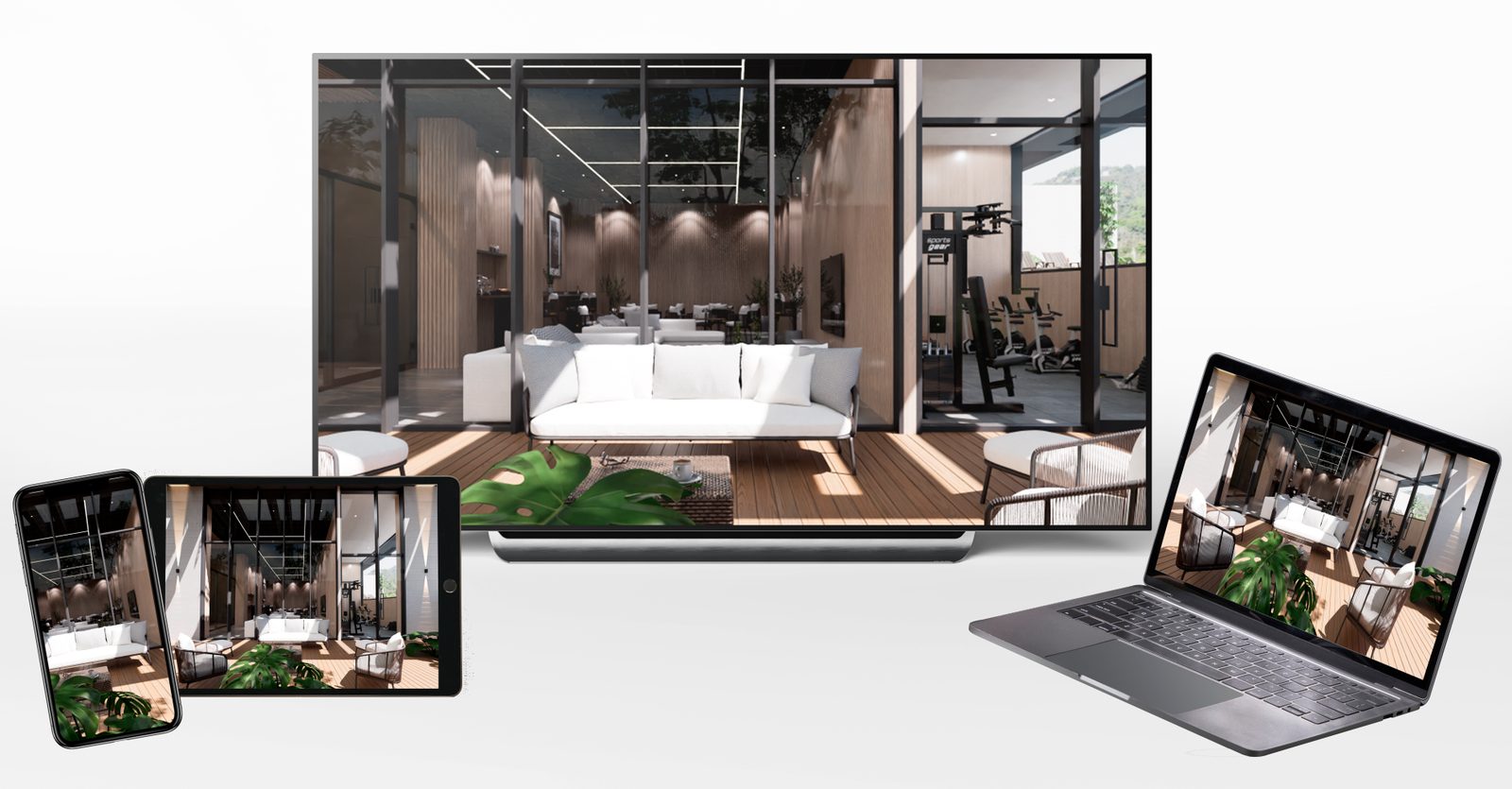
For a while, the debate among developers was binary: physical sales room or virtual sales room. It is a false choice. The physical room does some things very well —contact with the materials, face-to-face trust, the moment of signing— and others very badly: it does not reach buyers who are far away, it closes at six in the evening and it shows a single apartment.
The hybrid sales room resolves the choice by combining both with one team and one 3D model. And the result is not just adding channels: it is selling more with the same agents.
Want to see this on your project? Book a free demo
What a hybrid sales room is
It is a way of organizing a project's sales in which the virtual sales room is the center and the physical room is a support point. The buyer can start, advance and sometimes finish their decision without going anywhere, and when they do visit, the visit is shorter, better informed and closer to closing.
The condition for it to work is that everything comes from the same 3D model: what the buyer saw on their phone is exactly what the agent shows them on the room's screen. If each channel tells a different version of the project, the hybrid model turns into confusion.
Why it sells more with the same team
Agents serve more buyers
An in-person visit takes an agent one or two hours, including waiting. A guided video call through the 3D model fits between two visits, with no travel, and reaches the buyer who was never going to come. The same agent, in the same working day, presents the project to more people.
Nobody is left out
Not the buyer in another city, nor the one living abroad, nor the one who only has time at nine at night. In Colombia, one in four buyers of new housing does not live in the project's department, according to Camacol. In a physical-only room, that buyer does not exist. In a hybrid one, they explore the project like anyone else.
The second visit happens on the phone
"I'll come back with my wife" is where many sales go cold. In a hybrid room, the agent sends the tour on WhatsApp and the family explores it that same night. When they come back to the room, they come back to close.
Buyers arrive better informed
Someone who has already toured their unit type, seen their view and compared finishes arrives at the room with closing questions —price, payment plan, financing— rather than questions about understanding the project. The visit gets shorter and the closing rate goes up.
What goes in the physical room and what goes in the virtual one
| Stage of the sale | Virtual room | Physical room |
|---|---|---|
| First contact | A tour from the ad, the website or WhatsApp | Walk-in visitor, if the room is visible |
| Understanding the project | Surroundings, amenities, every unit type and views per floor | The same model, on the touchscreen |
| Choosing finishes | Live finish changes on the apartment | Real material samples to touch |
| Deciding as a family | The link everyone explores from their phone | A second visit, if they can come |
| Closing | Video call with the agent and remote paperwork | The face-to-face closing meeting |
The buyer's journey
In a hybrid sales room, buyers do not follow a single route. The most common ones:
- From the ad to the room. They see the video on social media, open the 360° tour, book on WhatsApp and arrive at the physical room with their unit type already chosen.
- From the room to the phone. They visit the room, explore the project on the screen with the agent and take the link home to show their family.
- One hundred percent remote. Location, a guided tour over video call, a free tour and closing, without setting foot in the room. That is how Grupo Koi closed deals on its Cronus project, with buyers from Medellín to Israel.
How to size the physical part
Since the virtual room does the showing, the physical one can be smaller and focus on what only it can do:
- A large touchscreen with the 3D model, replacing the physical scale model and the show apartments for each unit type.
- A real material samples area: floors, tiles, fixtures and woodwork.
- A comfortable closing area, with availability in view.
- A station set up for video calls, with a good connection and good lighting.
- One show apartment, or none. In high-end projects a single unit can make sense; in most, it is unnecessary.
Fewer square meters, less rent and less construction to dismantle at the end. We break down those line items in the budget of a physical sales room.
How the team is organized
A hybrid room does not need more agents, but it does need a different organization: a shared calendar for in-person and virtual meetings, shifts that cover the hours when remote buyers are available, a CRM that records every tour and every conversation, and a common script so the experience is the same in the room and on a video call.
What to measure
- Tours opened and which channel they come from.
- Virtual meetings and in-person visits, and how many end in a reservation.
- Time between first contact and reservation.
- Reservations from buyers who never visited the room.
That last figure is the most revealing: those are sales a physical-only room would never have made.
The hybrid room by project type
- Social-interest housing. A small physical room with a screen, WhatsApp tours and video calls for buyers who cannot visit during working hours.
- High-end. A well-designed closing room, with real materials and perhaps one show unit, and the full virtual experience for the views and the unit types that were not built.
- Projects with buyers abroad. The virtual room is the main sales room; the physical one is where those who travel come to sign.
To see the three formats side by side, go back to the real estate sales room guide, and to produce the digital part, follow how to create a virtual sales room.
Frequently asked questions
What is a hybrid sales room?
It is a sales room that combines a physical space, usually smaller, with a virtual sales room, run by the same team and based on the same 3D model of the project. The buyer moves forward with their decision remotely and visits the physical room to close or to see the real materials.
Why does a hybrid sales room sell more?
Because the same agent serves more buyers with video calls between visits, nobody is left out by distance or schedule, the family explores the project from their phones and buyers arrive at the room better informed and closer to closing.
What does the physical part of a hybrid sales room need?
A touchscreen with the 3D model, real material samples, a closing area and a station for video calls. The show apartment becomes optional.
Do you need more sales agents?
No. You need a different organization: a shared calendar for in-person and virtual meetings, shifts that cover remote buyers' hours and a CRM that records every tour and every conversation.
Ready to accelerate the sale of your project?
One model in Unreal Engine: renders, video, 360° tours and an interactive sales room, ready for any phone.
Request a demo