
One virtual sales room, five channels: in the sales room, remotely, live, at online fairs and on video calls
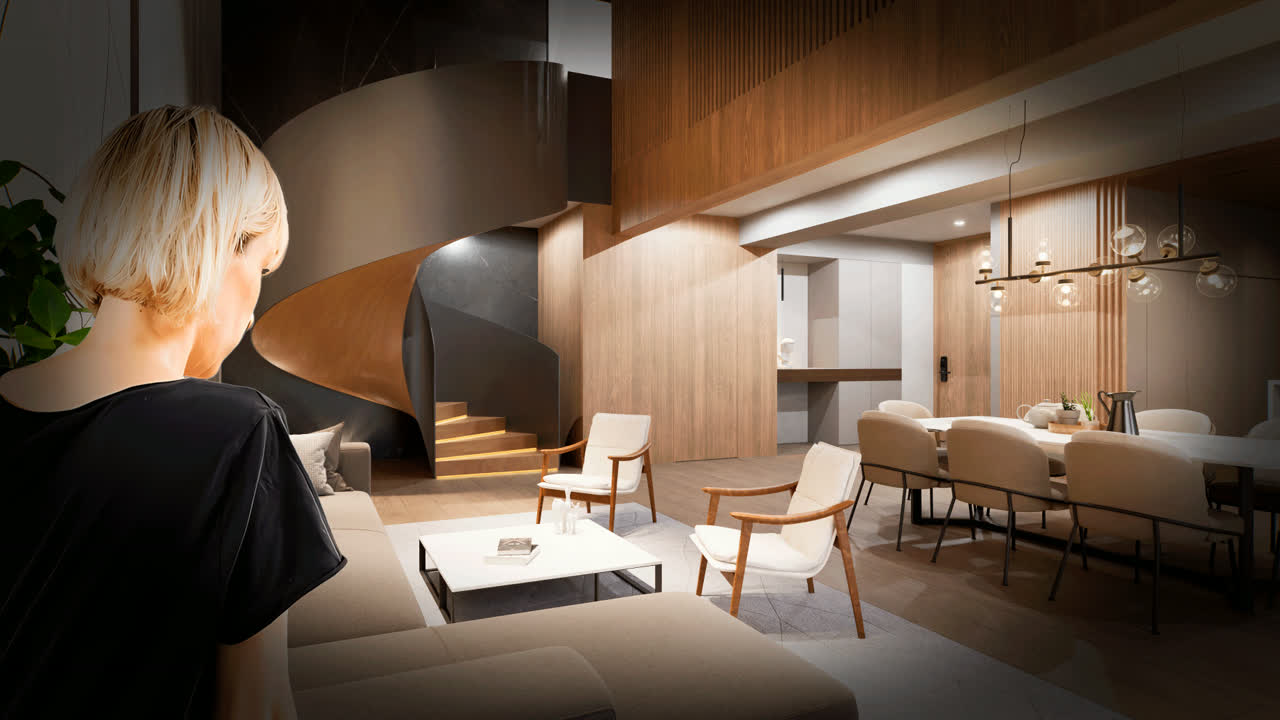
Many developers hire a virtual sales room with a single use in mind: the screen in the sales room, or the link the sales rep sends over WhatsApp. It is like buying a car only to drive to the supermarket. The project's 3D model, built once in a graphics engine, can work across five different channels, each with a different buyer and a different moment.
This guide explains what each channel does, what it needs and how buyers move from one to the next without anyone producing anything new. At the end of each section is the article that covers it in detail.
Want to see this on your project? Book a free demo
Why one model is enough for everything
A virtual sales room is the project built in a graphics engine such as Unreal Engine: the apartments, the amenities, the surroundings and the real view from every floor, all navigable in real time. We explain it in what a virtual sales room is.
Because the model runs in real time, it is not a video that has to be re-edited for every use. What the rep opens on the sales room screen can be opened on a phone, shared on a video call or captured for a live stream. Three things change from one channel to another: who drives the tour, how many people see it and what decision you are after at that moment.
The five channels at a glance
| Channel | Who sees it | Who drives the model | What it is for |
|---|---|---|---|
| Sales room | One family, with the rep | The rep, and at times the buyer | Closing: answering the questions a floor plan cannot |
| Remote | One buyer, on their phone | The buyer | Understanding the project before asking for an appointment |
| Live stream | Dozens or hundreds of people | An operator, while the rep presents | Sparking interest and booking appointments |
| Online fair | Visitors comparing several projects | The visitor or the rep on duty | Capturing qualified contacts |
| Video call | A family, sometimes in several countries | The rep, with moments for the client | Closing without anyone traveling |
1. In the physical sales room
In the sales room, the virtual model does what neither the floor plan nor the scale model can: step inside the apartment, look out of the window on the floor the buyer cares about and change the kitchen floor while they watch. That is where the sale stops being an explanation and becomes an experience, which is what raises the closing rate.
Three decisions determine whether it works: how it is combined with the physical scale model, what equipment runs it and what happens when five families arrive at once. We cover them in physical model or virtual model, what equipment the sales room needs and how to serve several families at once.
2. Remotely
According to Camacol, as of November 2025, 12.1% of new homes in Colombia were sold to people who do not live in the country, and another 12.5% to Colombians from another department. One in four buyers decides without setting foot in your sales room. For them, the tour link is the first visit and their phone is the sales room.
Selling remotely is not just sending the link. You need a team that answers when those buyers write, which is rarely during office hours, and a process so that the reservation, the paperwork and the signatures do not require travel. We explain it in a remote sales team and how to close a sale remotely.
3. Live streams
A live stream puts the project's model in front of many people at once: one rep presents, someone else drives the tour and the audience asks questions in the chat. It does not replace a visit, but it does something a recorded video cannot: it answers in the moment, with the image. It works for launching a tower, showing the view from each floor at sunset or serving Colombians abroad in their own time zone.
We have a guide to running the stream, a list of formats that end in appointments and the technical side in how to stream the virtual model live.
4. Online fairs
Housing fairs are no longer only in person. La Gran Feria Inmobiliaria, launched in 2020, brings together more than 150 developers in a 100% virtual event, and regional fairs such as the one run by El Universal and Camacol Bolívar in Cartagena have combined the physical pavilion with an online platform. At an online fair, buyers compare ten projects in an afternoon, and they usually stay with the one they can walk through.
You can run your own fair with your whole portfolio or take part in someone else's. We cover it in how to organize an online real estate fair, how to stand out in a virtual booth and how to turn a webinar into appointments.
5. Video calls with the virtual model
The video call is the visit for the buyer who lives far away, and often for the part of the family that could not come to the sales room. Done well, with the model on screen and the client saying where to go, it can close as well as an in-person visit. Done badly, with a shared PDF and a frozen image, it is lost in ten minutes.
We cover the conversation in how to present a project over video call. The technical side is in how to share the virtual model on Zoom, Meet, Teams or WhatsApp, and the call with the whole family in video calls with several decision-makers.
How buyers move from one channel to the next
Almost nobody buys a home in a single contact. A typical path looks like this:
- They see a clip from a live stream on social media and open the tour link on their phone.
- They tour the unit type they like and ask for an appointment.
- They have a video call with the rep, with their partner connected from another city.
- They visit the sales room on Saturday, change the finishes on the screen and reserve.
- That night they send the same tour to their parents, who see it from home.
What makes it work is that at every step they see the same thing: the same apartment, the same finishes, the same view. If the social video, the phone tour and the sales room screen come from different productions, the buyer notices the differences and trust suffers. That is why it pays to build one model for every sales asset.
Which channel to prioritize for your project
- Local project with a physical sales room: start with the sales room and video calls, which are the ones that close.
- Project with many buyers from elsewhere: prioritize the link, the video call and a remote closing process.
- Pre-sales with no sales room yet: live streams and video calls, as we explain in opening pre-sales with a virtual room.
- Developer with several projects: your own online fair lets you show the whole portfolio in a single event.
What to measure in each channel
Each channel has its own number, but they all end in the same one: reservations. In the sales room, the closing rate; remotely, how many opened links turn into appointments; in live streams and fairs, how many contacts ask for a video call; on video calls, how many end in a reservation. If your CRM records which channel each buyer came from, in three months you will know which one is selling for you. We explain it in sales room metrics.
At Inviewd we build the project once in Unreal Engine and leave it ready for all five channels: the sales room screen, the phone, the video call, the live stream and the fair. If you want to see how yours would look, explore the virtual sales room.
Frequently asked questions
What is a virtual sales room?
It is the project built in 3D in a graphics engine and toured in real time: the apartments, the amenities, the surroundings and the view from every floor. It is used on the sales room screen, on the buyer's phone, on a video call, in a live stream or at an online fair.
Do you need a different model for each channel?
No. The same model serves them all; what changes is how it is delivered: on the sales room screen, as a link for the phone, shared on a video call or captured for a live stream. Building it once keeps buyers from seeing different versions of the same project.
Which channel sells the most?
The one that closes is usually the conversation with the rep, in the sales room or on a video call. The other channels bring buyers there better informed. That is why it pays to measure them together: how many contacts from each channel become appointments, and how many appointments become reservations.
Is a virtual sales room useful if I already have a physical one?
Yes. Inside the physical room it shows what the floor plan and the scale model cannot, and outside it reaches the buyers who cannot come. This is what is known as a hybrid sales room.
Sources
Portafolio — Camacol / Coordenada Urbana: sales to non-residents (in Spanish) · Estrenar Vivienda — La Gran Feria Inmobiliaria (in Spanish) · El Universal — Tu Casa virtual real estate fair, 2022 (in Spanish)
Ready to accelerate the sale of your project?
We build your project once in Unreal Engine, and the renders, video, 360° tours and interactive sales room all come from it, ready for any phone.
Request a demo